
Part 1 (Nepal) – Roof Top of the World
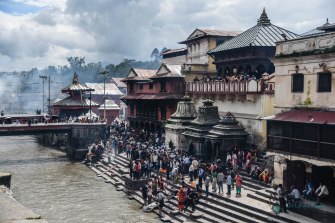
Death is a terrifying subject to deliberate especially when reflecting on the notions of life you perceive to be true. We decided to visit the extremely cultural grounds of Pashupatinath and immerse ourselves into a different side of the Nepalese culture. As one of the most important temples for the Hindu god of destruction, Lord Shiva, the temple itself is restricted to “Hindu Only” members but across the Holy River Bagmati one can safely observe the open air cremation platforms where deceased Hindus are cremated following some notable rituals.
The idea of observing a public cremation and watching weeping family members sounds intrusive but in reality its very heart-warming which any ounce of humanity a person has is brought forth as you observe the rituals that guide the deceased soul into the next life. As you hear the sounds of pain and crying from a grieving wife or heart broken daughter a surge of compassion is shot forward ready to console those in pain. It is a hard reality to witness but one that is very touching as you reflect on your own life and the life of those closest to you.

From observation, it seems like the Hindu religion and the cremation rituals blends a balance of the natural elements – water, fire, wind, and earth. As a way to continue the harmony amongst these four elements cremation has been a chosen ritual and the most honorable way to respect death. From our observation the process of celebrating life and death in regards to the natural elements was taken into a series of carefully monitored steps.
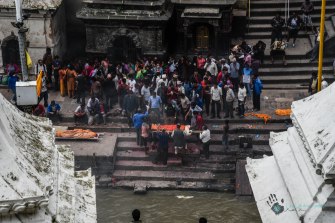
One of the first steps is that the deceased body is wrapped in ceremonial shrouds of white and orange and taken to the edge of the Bagmati River where family members gently cup handfuls of water and sprinkle it on the body.
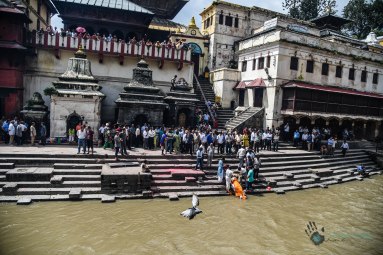 This element of ‘water’ is incorporated as a way to cleanse the body and soul before sending it to the next life. After the body has been cleansed, it is then taken from the river to the cremation ghats (platforms) made up of wood and straw, thus combining the earth elements. The body is put to rest within the wooden cocoon and then layered with additional straw and flowers. Likely the hardest aspect of the ritual and hardship is the responsibilities that the eldest son must ignite the platform after circling the body three times, thus incorporating the ‘fire’ element. As the firecatches tongues of orange flames chase flakes of ashes up into the heavens sending the soul into the afterlife. The life of the fire is taken over and managed by the main cremator who overseas the remaining cremation process. Although not a formal ritual but the ‘wind’ element is considered important to the Hindu religion nonetheless. As blazing flames and heat of the fire reduce the physical body to ashes, those ashes are integrated into the smoke that is carried into the heavens. The remaining ashes are swept into the river to ensure the soul is part of the natural environment from which it came.
Observing the humanity, respect and sincere concern for the Hindu’s loved one through their public open-air cremation has been a notable experience in our trip and surreal way to learn about a culture and practices of the people. The process of witnessing the decease and the family also captures you by surprise and urges you to evaluate your life, question the time you have left, and how you embrace all aspect of life before your time is up. I suppose life is worth celebrating and cherishing every simple moment.
Categories: Uncategorized
 livelifebyacompass.com
1 reply »